

Could a few gentle minutes before bed help you wake up with smoother extensions and fewer tangles? It’s understandable to worry that turning in for the night could pull at your attachments or leave your hair in knots. Learning how to sleep with hair extensions starts with a simple routine: let your hair dry, detangle without tugging, and choose a comfortable way to keep the lengths together.
This guide covers practical steps for bedtime and a gentle morning refresh. It also explains why your routine may vary with your extension method, rather than relying on one approach for every installation. Tanya’s Image & Wellness Salon in Cincinnati offers weft, tape-in, V-Light, and K-tip extensions, with pricing provided after a personalized consultation. That conversation can help you discuss your extension choice and the care that fits your needs.
Key Takeaways
- Detangle gently before bed, working through small sections without pulling at snags or attachments.
- Choose between wearing your hair loose, in a loose braid, or in a low gathered style based on comfort.
- If you wake to tangles, separate the lengths gently before styling instead of rushing or tugging.
- A personalized consultation can help you discuss extension options and care suited to your needs and desired result.
Why sleeping with hair extensions calls for a gentle routine
A few careful steps before bed can make sleeping with extensions feel more manageable. The aim is to limit friction and keep loose lengths from shifting into knots, not to promise that tangles or wear will never happen. A calm routine can help you wake up ready to refresh your style without making bedtime complicated.
Your routine may depend on how your extensions are attached and where the attachments sit. A style that feels comfortable for one person might create pressure or pulling for another. Follow the care instructions you received for your installation if they differ from general tips. Advice specific to your method and placement should take priority.
What can make extensions tangle overnight?
As you move during sleep, loose lengths can rub against bedding, clothing, or one another. Strands may cross or bunch together, making tangles more likely. Hair left unsecured can also shift across your head, so sections overlap rather than resting neatly.
Not everyone wakes up with the same amount of tangling. Hair length, movement during sleep, and attachment placement can all affect what feels comfortable. A gentle routine limits unnecessary movement without forcing your hair into a tight style.
Why your extension method matters
Hair extensions can be attached in different ways. General background on the types of hair extensions helps explain why care isn’t one-size-fits-all. Tanya’s Image & Wellness Salon offers hair extension services in Cincinnati, including weft, tape-in, V-Light, and K-tip extensions.
Attachment placement can affect whether gathering your hair, braiding it, or leaving it loose feels comfortable. Don’t assume one bedtime style suits every method. If a style causes pressure, pulling, or discomfort, change it rather than forcing it because it is common advice.
Consider your extension method alongside your hair, lifestyle, and preferred way of wearing it. A personalized consultation at Tanya’s Image & Wellness Salon in Cincinnati gives you an opportunity to discuss extension options and your individual needs. For care specific to an existing installation, follow the instructions you received for that method. General tips can be a starting point, but comfort and attachment placement matter.
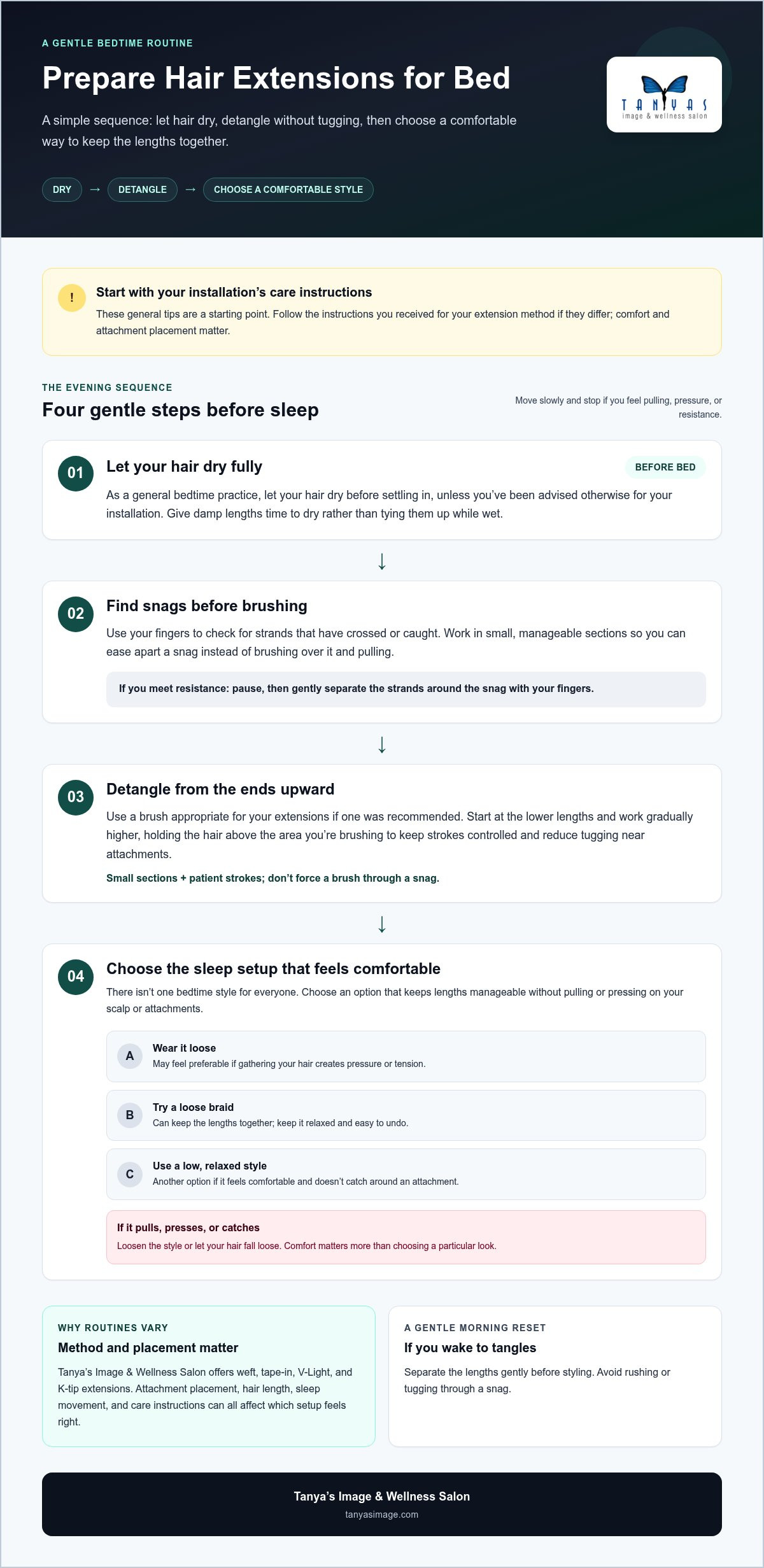
How to prepare hair extensions for bed, step by step
A simple evening sequence can make extension care easier: start with dry hair, gently work through tangles, then decide whether gathering the lengths feels comfortable. Treat this as a starting point, not a rigid rule. If you have care instructions for your installation, follow those first.
- Start with dry hair. As a general bedtime practice, let your hair dry fully before settling in, unless you’ve been advised otherwise for your installation. Damp lengths can bunch together more easily, so give them time to dry instead of tying them up while wet.
- Check for snags before brushing. Use your fingers to find strands that may have crossed or caught. Working in small sections helps you address a snag gently instead of brushing over it and pulling.
- Detangle from the ends upward. Begin at the lower lengths and gradually work higher. Hold the hair above the area you’re brushing to keep your strokes controlled and reduce tugging near the attachments.
- Gather the hair only if it feels comfortable. A loose braid or relaxed, low arrangement can keep the lengths together, but neither is essential. If tying your hair creates pressure or pulling, leave it loose.
Detangle carefully before bedtime
Use a brush that is appropriate for your extensions if one was recommended for your installation. Separate your hair into manageable sections and make gentle strokes from the ends upward. If you meet resistance, pause. Ease apart the strands around the snag with your fingers rather than tugging through it or brushing over an attachment. Patient, controlled strokes are preferable to force.
This careful approach is also reflected in general nighttime routine guidance for extensions. For your own installation, follow the care instructions you received.
Choose a loose, comfortable bedtime style
A loose braid may work if it keeps the lengths together without pulling. A low, relaxed style is another option, while wearing your hair loose may feel better if a braid or tie creates tension. Keep any style easy to undo, and notice how it feels around your roots and attachments. Comfort matters more than choosing a particular look.
For guidance on extension options that suits your needs, explore hair extension services in Cincinnati at Tanya’s Image & Wellness Salon. A personalized consultation gives you a chance to discuss your desired result and everyday routine.
Which sleep setup suits different hair-extension routines?
The right sleep setup is one that feels comfortable and helps prevent your lengths from becoming unnecessarily tangled. You might leave your hair loose, gather it low, or wear a relaxed braid. None is a universal requirement. Attachment placement, hair length, how you sleep, and your care instructions can all influence what works for you.
Loose hair, braid, or low style: how to decide
Leaving your hair loose avoids tying it back, which may feel preferable if a gathered style presses on your scalp or attachments. Loose lengths can move against bedding or overlap as you turn. If that bothers you, try keeping the hair together gently instead of pulling it snugly into place.
A relaxed braid can contain longer sections, while a low, loose arrangement may feel simpler if you don’t like sleeping in a braid. Keep either style easy to undo and notice how it feels when you lie down. If it pulls, creates pressure, or catches around an attachment, loosen it or let your hair fall loose. Choose the option that feels comfortable rather than following a routine that doesn’t suit you.
Pillowcases and sleep coverings: optional comfort choices
A smooth pillowcase is an optional way to reduce friction as your hair moves against the bedding. It isn’t a guarantee against tangling or a requirement for everyone with extensions. You could also try a soft sleep covering if it feels comfortable and holds your hair gently without pulling. Skip it if it feels restrictive or catches on your hair.
Change one part of your setup at a time so you can tell what feels better. If a loose braid is comfortable but your lengths still shift across the pillow, you could try a smoother pillow surface. If a covering makes your scalp feel tight, take it off rather than securing it more firmly. Small adjustments can help you find a setup that suits your sleep habits without adding unnecessary steps.
The goal isn’t to find one perfect arrangement for every installation. Choose a comfortable setup that gently contains the lengths if needed, without noticeable tension at the roots or attachment points. Follow care instructions for your method, especially if a particular style causes discomfort. Your preferred setup can change from night to night. Comfort matters more than sticking to a universal rule.
What to do in the morning if extensions feel tangled
A few strands crossing overnight don’t necessarily call for a complicated fix. Take a moment to assess your hair before styling, then work through it gently instead of trying to restore your look in a hurry. Avoid pulling at a knot, especially near the attachment areas.
A gentle morning detangling sequence
Start by easing apart the lengths with your fingers. Divide the hair into sections you can manage comfortably, then work from the ends upward with short, careful strokes. If you feel resistance, stop and separate the strands around the snag before continuing. Keep your movements controlled so you don’t draw tension toward the attachments.
- Check first: Notice whether the hair is loosely crossed or has formed a tighter, compacted area.
- Work patiently: Begin at the ends and move upward a little at a time, following the brushing guidance for your installation.
- Pause at resistance: Don’t yank, rush, or brush forcefully through a knot. Ease apart only what releases comfortably.
A minor tangle may loosen with gentle handling. Persistent matting, repeated knots in the same area, or discomfort around an attachment needs more care. If the hair resists your careful efforts, don’t keep working at it just to finish getting ready.
When repeated tangling needs personalized attention
Recurring matting, pulling, or tenderness is a good reason to seek guidance from the stylist who knows your installation. These signs can have different explanations, and the cause can’t be identified without assessing your hair and attachments. Advice based on your method and placement is more useful than relying on a general rule that may not fit.
Avoid cutting into a snag, pulling it free, or trying to adjust an attachment yourself. If the hair seems caught, avoid adding tension to the area and arrange professional guidance. Note where repeated tangles happen and whether they follow a particular sleep style. That detail can help explain what you’re experiencing.
For personalized support with extension options and care, you can schedule a hair extension consultation at Tanya’s Image & Wellness Salon. A consultation gives you a chance to discuss your method and individual needs.
How a Cincinnati extension consultation can personalize your sleep routine
General bedtime tips can be a useful starting point, but a comfortable routine depends on more than the extension method alone. Attachment placement, your hair’s needs, how you move during sleep, and the result you want all shape what feels practical. A personalized conversation can help you consider how extension care fits into your day-to-day routine.
What personalized extension guidance can address
Tanya’s Image & Wellness Salon offers weft, tape-in, V-Light, and K-tip extensions. A personalized consultation gives you an opportunity to discuss your extension choice, desired result, and individual needs. You can describe what happens overnight, such as recurring tangles in one area, tension when you gather your hair, or discomfort with a particular sleep style.
Those details help make the conversation specific without assuming the same approach works for everyone. Your lifestyle matters, too. If you prefer a quick evening routine, say so. If you like to style your hair before bed, mention that as well. Your desired look and the way you typically wear your hair can inform the discussion.
Rather than tightening a braid or trying to change an attachment yourself when pulling keeps recurring, explain what you’re experiencing during your consultation. Discussing the method, placement, and your hair’s needs together helps keep the conversation focused on your situation. You can then consider which parts of your routine feel comfortable and practical.
Explore extension services in Hyde Park, Cincinnati
At Tanya’s Image & Wellness Salon in Hyde Park, Cincinnati, a personalized consultation is an opportunity to discuss extension options, your desired result, and your individual needs. Explore the salon’s hair extension services in Cincinnati and talk through the everyday care that matters to you.
It may help to describe the sleep styles you’ve tried and whether they felt comfortable. If tangling keeps returning, mention where it occurs and how you arrange your hair at night. Clear, practical details make the conversation more relevant to your needs than a universal rule that may not suit your installation.
Your nighttime routine doesn’t need to be elaborate. It should feel comfortable and manageable. If you’re considering extensions, or want to discuss your needs before choosing an option, a personalized consultation is a useful next step.
Build a routine that feels right for you
Your nighttime routine doesn’t need to be perfect to be useful. Notice what feels comfortable, pay attention to whether tangles keep returning, and make gentle adjustments instead of forcing a style that doesn’t suit you. The best approach to how to sleep with hair extensions is one you can follow comfortably and consistently.
If you’re considering extensions, a personalized consultation is a chance to discuss your desired result and everyday routine. Extension pricing is provided after a personalized consultation.
Explore hair services and schedule a consultation with Tanya’s Image & Wellness Salon in Cincinnati.
Frequently Asked Questions
Can I sleep with wet hair extensions?
Sleeping with wet extensions may make detangling and settling comfortably more challenging, though the experience can vary by method and installation. If your hair is damp before bed, follow the care instructions for your installation. Ease apart any loose tangles gently and, when appropriate, allow the hair to dry before lying down. Don’t assume one rule fits every attachment type.
Should I braid my hair extensions before sleeping?
A loose braid can keep the lengths together for some wearers, but it’s optional. If you try one, keep it relaxed so it doesn’t pull near the attachment points. You might prefer a low, comfortable style or wearing your hair loose instead. Choose based on how your extensions feel, and follow the care instructions for your installation.
Is a silk or satin pillowcase necessary for hair extensions?
No, a silk or satin pillowcase isn’t necessary, and no pillowcase can guarantee tangle-free hair. A smoother surface is an optional comfort choice that may reduce friction as your hair moves against the bedding. Choose bedding that feels comfortable and doesn’t catch or pull at your lengths. Gentle detangling and your care instructions remain important whatever pillowcase you use.
Can I wear a bonnet or sleep cap with hair extensions?
A soft sleep covering may suit you if it feels comfortable and doesn’t tug, press, or shift your attachments. It isn’t essential for everyone, so let comfort guide your choice. If the covering creates tension, take it off rather than adjusting it to fit more tightly. Follow the care recommendations for your particular method and installation.
What should I do if my hair extensions feel tight when I lie down?
If a bedtime style creates pulling, loosen it or change position to reduce pressure. Don’t try to adjust or remove the attachments yourself. Notice whether the tight feeling eases when your hair is no longer gathered. If it persists or repeatedly interrupts your sleep, seek personalized guidance from a stylist. The sensation alone doesn’t identify its cause.
Does the same bedtime routine work for weft, tape-in, V-Light, and K-tip extensions?
Not necessarily. Gentle handling and avoiding tension are useful general principles, but care may differ with your method and individual installation. Tanya’s Image & Wellness Salon offers weft, tape-in, V-Light, and K-tip extensions. If you’re unsure how to sleep with hair extensions or a routine feels uncomfortable, discuss your needs during a personalized consultation rather than relying on a universal rule.


