

Keeping balayage beautiful between appointments depends less on frequent touch-ups and more on a few thoughtful habits. If you’re unsure whether washing, heat styling, sun exposure, or the wrong toning product is affecting your color, learning how to make balayage last longer starts with understanding what your hair needs.
Brassiness can be frustrating, especially when purple shampoo seems like the obvious fix. It can help neutralize yellow tones, but it won’t correct every color shift. Using it too often may leave hair looking dull or overly cool. Your routine should support both the tone you love and the condition of your lightened hair.
This guide covers practical ways to care for balayage between appointments, including choosing heat protectant and UV-filter hair products and recognizing when a professional tonal refresh may help. At Tanya’s Image & Wellness Salon in Hyde Park, Cincinnati, recommendations account for factors such as washing frequency, water quality, heat styling, and sun exposure. Many guests schedule toner refresh appointments every 6-8 weeks, though the right timing varies. You’ll learn how to build a manageable routine around your hair and lifestyle, and when to seek professional guidance.
Key Takeaways
- Balayage maintenance means preserving the tone and dimension you want while keeping your hair condition and preferred upkeep in mind.
- Hard-water minerals, sun exposure, heat styling, product buildup, and natural underlying pigments can all affect how vibrant balayage looks.
- To learn how to make balayage last longer, build a flexible routine with professional blonde care, heat protectant before styling, and hair products containing UV filters.
- If brassiness persists or your hair looks orange, professional toning or color correction can address concerns that at-home care may not.
What Helps Balayage Stay Beautiful Between Appointments?
Balayage that lasts isn’t color that stays exactly the same indefinitely. It’s color whose tone and dimension remain pleasing as your hair and preferences evolve. A care routine can help preserve the look you want, but it can’t promise that your shade will never shift.
The balayage hair coloring technique creates dimension through customized placement of lightness, so the finished look is personal from the start. Maintenance is personal, too. It involves caring for both your color and your hair between professional appointments, while deciding how much upkeep feels right for you.
What does balayage maintenance actually mean?
For one person, maintenance may mean keeping a bright, cool tone looking polished. Another may prefer softer warmth and a relaxed, lived-in effect as the color grows out. Neither preference is automatically better. The goal is to know what you want your balayage to look like over time, then choose care and appointments that support it without demanding more upkeep than suits your lifestyle.
Hair condition belongs in that conversation. Lightened hair may need care that supports softness and manageability, while the tone you want may call for a different approach. A routine that considers both is more useful than focusing only on keeping blonde bright.
Why does balayage change over time?
Daily habits and environmental exposure can influence how color looks between visits. The changes vary with your shade, washing frequency, water quality, heat styling, and time in the sun. As a result, two people with balayage may notice different shifts, even if their starting color looks similar.
Someone who washes frequently or regularly uses hot tools may have different care priorities from someone who washes less often and styles with little heat. Water quality and sun exposure matter, too. These factors don’t mean your color will change in a predictable way, but they can help explain why a routine that works for one person may not suit another.
This is a practical starting point for learning how to make balayage last longer: decide what “lasting” means for your preferred tone, dimension, hair condition, and upkeep level. Then notice what’s changing before making several adjustments at once. If your hair still looks beautiful but has grown out, you may simply be ready for a refresh. If the tone looks different from what you want, care choices or professional toning may be more relevant. Next, identify common causes of brassiness and fading, then choose protection that fits your routine.
What Causes Balayage to Look Brassy or Less Vibrant?
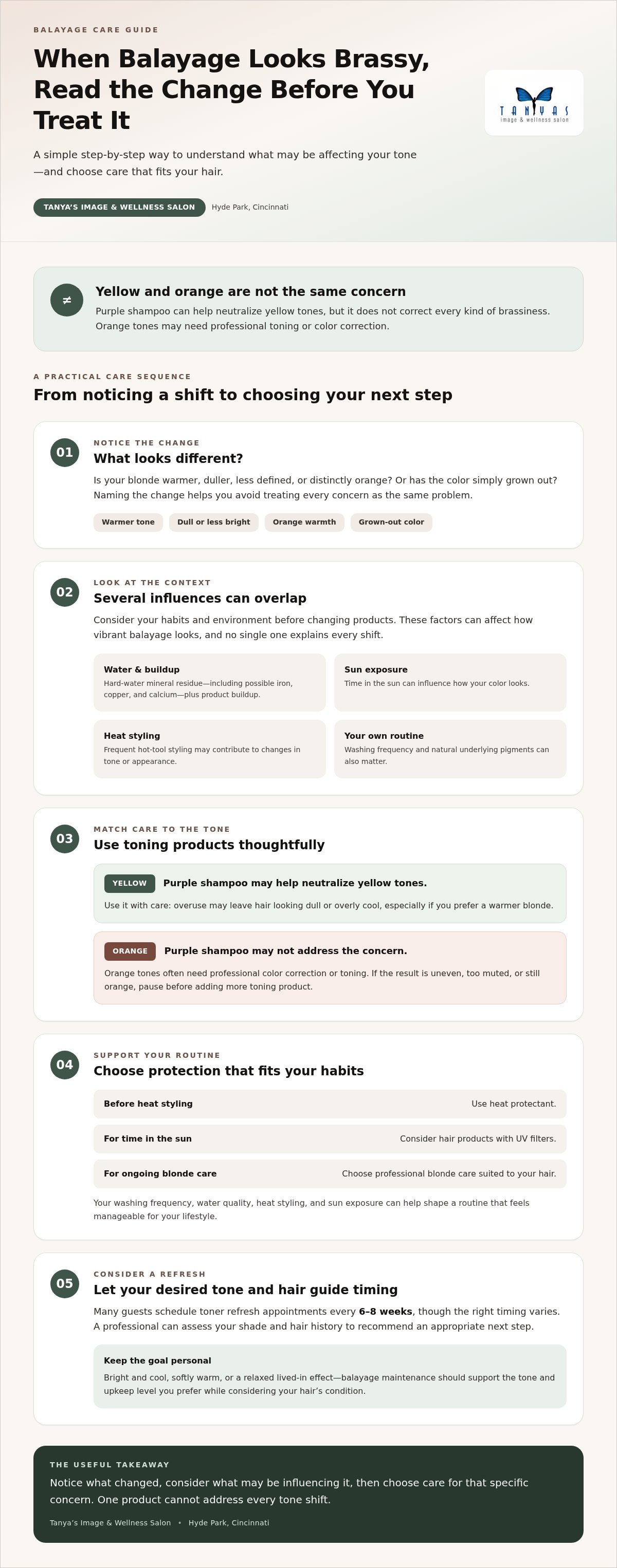
A change in tone doesn’t always mean your balayage needs to be redone. Blonde can look warmer, duller, or less defined for several reasons. Start by noticing what kind of change you’re seeing. Mineral buildup from hard water, UV exposure, heat styling, product buildup, and natural underlying pigments can all contribute to a less vibrant appearance. No single factor explains every shift.
These influences can overlap. Your hair may have mineral residue and regular heat exposure, while its natural underlying pigments also affect the warmth visible in the lightened sections. That’s why a routine for how to make balayage last longer should respond to the specific tone change, rather than relying on one product to solve every concern.
How can hard water, sun, and heat affect blonde tone?
Hard water can leave mineral buildup on hair. Minerals such as iron, copper, and calcium are possible contributors, but hard water isn’t the only reason blonde may look different. Product buildup can also make hair appear less bright or feel coated. If your color looks dull, consider whether your routine or water quality may be part of the picture instead of assuming the balayage itself is the only issue.
UV exposure and heat styling are separate considerations. Time in the sun can affect how color looks, and frequent hot-tool styling may also contribute to changes in tone or appearance. Your habits matter: someone who styles with heat often may have different care priorities from someone who rarely uses hot tools. A clear view of your routine helps you make later adjustments more intentionally.
Why purple shampoo does not address every kind of brassiness
Purple shampoo neutralizes yellow tones, so it may help when yellow is the specific concern. It doesn’t correct all brassiness. Orange tones often need professional color correction or toning because the issue differs from yellow warmth. If the color looks distinctly orange, repeatedly reaching for purple shampoo may not address what you’re seeing.
Use purple shampoo thoughtfully. Overuse may leave hair looking dull or overly cool, especially if you prefer a warmer blonde. If the tone becomes uneven, too muted, or remains orange, pause before adding more toning product. A professional can assess the shade and hair history, then recommend an appropriate next step.
At Tanya’s Image & Wellness Salon, blonde care is tailored to the color and the factors affecting it. If you’re unsure whether mineral buildup, warmth, or another concern is changing your result, personalized blonde color guidance can help you understand what to address before making changes at home.
Which Balayage Care Choices Make the Most Difference?
Each useful care choice has a distinct purpose. Professional blonde products support your color-care routine, heat protectant is applied before styling, UV-filter hair products support sun protection, and a professional toner refresh can address a tone that no longer feels right. These choices work best when they match your shade, hair condition, and habits, rather than being treated as a universal formula for how to make balayage last longer.
How should you choose products for balayage?
Start with professional blonde care suited to your hair and the result you want. Your washing frequency, water quality, styling habits, and product buildup can all shape what makes sense. Product labels don’t tell the whole story, and no single shampoo, mask, or styling product should be expected to solve every color or condition concern.
Product preferences don’t need blanket ingredient rules. What suits one person may not suit another, depending on their hair and routine. If you’re unsure what to use, personalized guidance can help you choose professional blonde products and toning care that fit your shade and needs. Keep your routine manageable so it’s easier to follow consistently.
When does purple shampoo help, and when is toner more appropriate?
Purple shampoo is intended to neutralize yellow tones, not every form of brassiness. If you’re noticing orange, purple shampoo may not address the concern, and professional color correction or toning may be more appropriate. Using purple shampoo too often can leave hair looking dull or overly cool, so avoid adding more simply because the shade feels warmer than you’d like.
A professional toner refresh offers a more tailored option when your tone needs attention. The right timing depends on individual factors, including your shade and how you care for your hair. It’s a maintenance choice, not a fixed appointment schedule for everyone.
| Concern | Confirmed care approach | When professional guidance helps |
|---|---|---|
| Everyday blonde care | Choose professional blonde products suited to your hair and desired tone. | When your routine isn’t supporting the look or condition you want. |
| Heat styling | Apply professional heat protectant before styling. | When styling habits or hair condition call for a more tailored routine. |
| Time in the sun | Use hair products containing UV filters for sun protection. | When you’re unsure how to adapt care to your usual sun exposure. |
| Tone that has shifted | Use purple shampoo only for yellow tones, with care. | For persistent warmth, orange tones, or a personalized toner refresh. |
At Tanya’s Image & Wellness Salon, professional blonde care and tonal refresh recommendations are tailored to your hair and desired result. If you’d like support choosing a routine or assessing a tone change, personalized blonde color guidance can help you make your next care choice with confidence.
How to Build a Balayage Routine Between Salon Visits
A sustainable routine doesn’t need to be complicated. Think of it as a few repeatable choices, adjusted to your color, hair condition, and lifestyle. Your original color placement and preferred level of brightness can shape how you care for balayage as it grows out. A lived-in look may suit a relaxed upkeep rhythm, while a cooler or brighter tone may lead you to monitor changes more closely.
A practical routine for everyday color care
Use these steps as a flexible framework, not a rigid schedule. Your washing habits, water quality, styling, and time in the sun can change what your hair needs. Observe how your color and hair condition respond rather than adding products automatically.
- Choose professional blonde care. Select products suited to your hair and desired tone. If you’re unsure what fits, seek individualized guidance rather than choosing products based only on a broad label or a friend’s routine.
- Protect hair before styling. Apply professional heat protectant before using hot tools. If you style with heat often, include this step each time you style and follow the product directions.
- Account for sun exposure. Hair products containing UV filters support sun protection. Consider how much time you typically spend outdoors when deciding how these fit into your routine.
- Monitor the tone. Notice whether the color looks yellow, orange, dull, or simply softer as it grows out. These changes may call for different responses, so avoid repeatedly adding toning products without identifying the concern.
There’s no universal washing schedule for every balayage client. Instead, pay attention to how your hair feels and looks between washes, and keep your routine manageable enough to follow consistently. This tailored approach is more useful than trying to follow every general tip you come across.
How to plan a toner refresh appointment
Many guests schedule toner refresh appointments every 6-8 weeks, but that’s a guide, not a requirement. Shade, washing frequency, water quality, heat styling, and sun exposure can all affect timing. Your preferred upkeep level matters, too. If the tone still feels right, you may not need a refresh on the same schedule as someone seeking a cooler or brighter result.
Professional toner can be considered when your shade has shifted in a way that at-home care isn’t addressing. Describing what you’re noticing and what you’d like to see instead helps guide the appointment. Tanya’s Image & Wellness Salon offers personalized blonde color guidance. Consider scheduling a tonal refresh when your desired result calls for professional attention.
When Professional Balayage Care Can Help Preserve Your Desired Tone
At-home care can support your color, but persistent brassiness or a noticeable orange tone may call for professional attention. Purple shampoo is intended for yellow tones and won’t address every kind of warmth. If repeated home care isn’t bringing your shade closer to the result you want, a professional can assess the color and help determine whether toning or color correction is appropriate.
What to expect from individualized blonde-care guidance
A useful consultation looks beyond the shade alone. Your stylist can consider your current tone, hair condition and color history, how often you wash and heat-style, your sun exposure, and how much upkeep fits your lifestyle. These details help shape recommendations around your actual routine instead of relying on a standard plan for every balayage client.
The goal is to understand what you’d like to maintain, whether that’s a soft, lived-in blonde or a brighter, cooler tone, and discuss practical options. Toner timing and at-home care recommendations vary with individual factors. If your color has shifted but your hair also feels dry or difficult to manage, that condition should be part of the conversation, not treated as separate from color care.
How salon toning and corrective blonding address different needs
A tonal refresh is a professional maintenance option when blonde color no longer reflects your preference. Persistent brassiness, especially orange tones, may need professional correction or toning rather than more purple shampoo. Uneven color can also benefit from an assessment of the existing shade and color history before deciding on an approach. The right plan depends on what has changed and the result you want, not on a guaranteed or identical outcome for everyone.
Tanya’s Image & Wellness Salon offers balayage, highlights, and tonal refresh appointments. Wella Professionals color and Wella BlondorPlex Lightener are used for blonde services. These are part of the salon’s approach to blonde color, while recommendations for maintaining your tone remain individualized. Explore the salon’s hair coloring services to learn more about options connected to balayage care.
Learning how to make balayage last longer includes knowing when a home routine is enough and when a professional perspective may be more useful. If the tone remains warmer than you’d like, looks uneven, or is difficult to assess at home, a personalized appointment can help clarify an appropriate next step. Schedule a personalized salon appointment to discuss your balayage and the care that suits your hair and lifestyle.
Make Your Next Color Visit More Personal
Your ideal balayage routine can evolve as your style, schedule, and hair change. Notice what you enjoy most about your color over time: the brightness around your face, the softness of the dimension, or the way it grows out. Sharing those preferences at your next appointment gives your stylist a clearer picture of what you want to keep and what you’d like to adjust.
That conversation can also help shape a care plan that feels realistic for your day-to-day life. The goal of learning how to make balayage last longer isn’t to hold your hair to one fixed look, but to make thoughtful choices that support your preferred result between visits. Noticing what’s working can make your next color decision more considered.
Ready to talk through your goals and plan your next step? Schedule a personalized balayage appointment or call 513-533-9400. With guidance tailored to your hair and preferences, you can move forward feeling confident about the color you choose.
Frequently Asked Questions
How often should blonde hair be toned?
Many guests schedule a toner refresh every 6-8 weeks, but your ideal timing may differ. Your shade, washing frequency, water quality, heat styling, and sun exposure all help shape how quickly your tone changes. If your blonde still looks the way you want, you may not need a refresh simply because a certain number of weeks has passed. Use the interval as a guide when discussing personalized upkeep.
Can purple shampoo fix all brassiness?
No. Purple shampoo can help neutralize yellow tones, but it isn’t a solution for every warm shift. Orange tones often need professional color correction or toning instead. If your hair looks more orange than yellow, repeatedly using purple shampoo may not address the issue. Follow product directions and avoid overuse, which may leave blonde looking dull or overly cool.
How does the salon protect hair during blonding?
Tanya’s Image & Wellness Salon uses Wella Professionals color and Wella BlondorPlex Lightener for blonde services. The salon also considers hair condition and color history when planning blonding, rather than treating every starting point the same way. Bond-building technology, custom timing, and repair treatments are part of the salon’s protective approach. This helps inform color decisions without promising that lightening will have no effect on hair.
Can brassy or uneven color be corrected?
Often, yes, but the next step depends on what’s causing the appearance and your hair’s current condition. Soft overall warmth may call for a different approach than distinct orange tones or patchy brightness. An in-person assessment helps determine whether a tonal refresh or corrective blonding is appropriate. Share what you’ve tried at home and describe the tone you’d like, so the discussion can focus on a realistic plan.
Will blonding damage my hair?
Blonding can affect hair condition, but the degree varies with factors such as previous color services and your hair’s starting condition. No approach can promise that lightening will leave every strand unchanged. At Tanya’s Image & Wellness Salon in Hyde Park, Cincinnati, Wella BlondorPlex Lightener and an individualized plan are part of the salon’s approach to protecting hair during blonding. Discussing your color history helps guide decisions about how to make balayage last longer.
Can you fix brassiness or uneven color?
Yes. Tanya’s Image & Wellness Salon offers corrective blonding for concerns such as brassiness or uneven color. The appropriate service depends on the existing shade and your hair history, so correction isn’t always the same as a routine toner refresh. Professional guidance can help clarify which option fits your concern and desired result, especially if home toning hasn’t brought the color closer to the look you want.


