

The right extensions are the ones that blend with your natural texture and suit your hair’s density, strand thickness, color, and your everyday routine. To understand how to choose the right hair extensions, start with the result you want, then weigh those factors alongside the extension material and attachment method. Tape-ins can suit medium-to-fine hair because they lie flat, but the best fit depends on your individual hair and goals.
It’s natural to focus first on added length or fullness. But extensions that feel too heavy or don’t match your curl or wave pattern can be difficult to blend and wear comfortably. A thoughtful match matters as much as the finished look.
In this guide, compare common extension options and consider hair thickness, color, texture, and lifestyle. You’ll also learn what to weigh when considering tape-ins and how human and synthetic hair differ, so you can make a more informed choice.
Key Takeaways
- Start with your hair’s density, strand thickness, texture, and desired result to narrow down suitable extension methods.
- Clip-ins offer a temporary option you can apply and remove yourself; consider how often you want to wear extensions before choosing them.
- Tape-ins lie flat and may suit medium-to-fine hair, but their fit depends on your natural hair and daily routine.
- Human and synthetic hair differ in styling versatility and upkeep, so weigh the look you want against the care you’re comfortable providing.
- Color, curl pattern, and the weight of the extensions all affect how naturally they blend and feel.
What Hair is Best for Extensions?
The best hair extensions for you will blend with your natural texture, density, and color while delivering the length or fullness you want. Compare your strand thickness and daily styling habits with the attachment method. Straight extensions may look disconnected against curls, while a matching wave pattern can create a more cohesive finish.
Possible risks include tension-related breakage or traction hair loss, scalp irritation or an allergic reaction to an attachment material, and damage from excess weight or unsuitable application. Fine hair may not support heavy extensions well, and micro-links can slip if installed incorrectly.
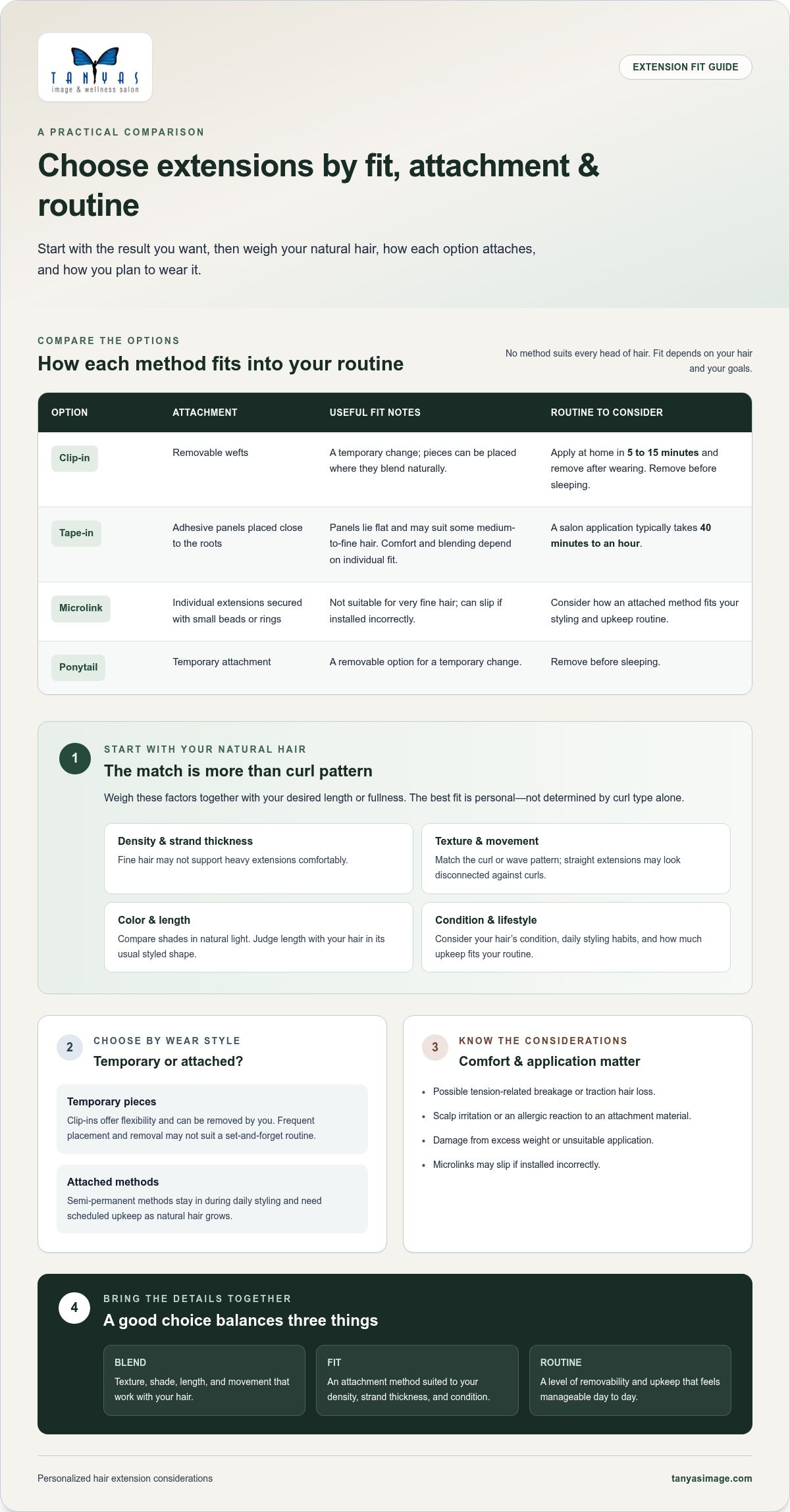
Clip-in extensions offer a temporary change without a long-term attachment. You can apply them at home in 5 to 15 minutes, then remove them after wearing. Clip-in and ponytail extensions should be removed before sleeping. Consider how often you want to add length: frequent removal and placement make clip-ins better suited to flexible styling than a set-and-forget routine.
Customized clip-ins can create a specific transformation, such as turning a chic bob into cascading waves in minutes. Match the shade, length, and curl or wave pattern to your own hair, then place the pieces where they blend naturally. Human hair extensions offer styling versatility, but matching the strand texture is just as important as matching the color.
Tape-ins attach at the roots in flat panels, while microlinks secure individual extensions to small sections with beads or rings. Neither method suits every head of hair: tape-ins may work for medium-to-fine hair, while micro-links aren’t suitable for very fine hair. A stylist can assess your natural hair alongside the salon’s hair services when planning a seamless result.
| Option | Attachment | Useful consideration |
|---|---|---|
| Clip-in | Removable wefts | Temporary styling; apply at home |
| Tape-in | Adhesive panels | Lies flat; suits some medium-to-fine hair |
| Microlink | Small beads or rings | Individual strands; not for very fine hair |
| Ponytail | Temporary attachment | Remove before sleeping |
Choose by weighing texture match, attachment method, and your routine together. If you want occasional volume or a quick length change, removable clip-ins may suit you. For a longer-wearing option, discuss how tape-ins or microlinks would work with your hair’s density and condition.
Length also affects how well extensions blend. Curly or wavy hair can appear shorter when styled, so compare extensions with your hair in its usual shape, not only when stretched straight. For a polished result, match the extension’s curl pattern and consider how its strands move beside your own.
Personalized consultations based on hair density, color, and lifestyle
A consultation connects your desired look with your natural hair and daily routine. To understand how to choose the right hair extensions, consider the method, upkeep, comfort, color match, and hair quality together.
Lifestyle and maintenance fit
Temporary extensions suit occasional changes, while semi-permanent methods stay attached during daily styling and need scheduled upkeep. Choose based on how much time you’ll spend caring for them and whether you want to remove them yourself. Clip-ins need regular removal, so they suit flexible styling better than a routine where you want extensions to stay in place.
To choose between temporary and semi-permanent extensions, consider how often you’ll wear them and whether ongoing maintenance fits your routine. Temporary pieces offer flexibility; attached methods need care as natural hair grows. If you change styles often, you may value removability more than you would if you wanted a consistent everyday look.
Extension costs depend on the method, material, and amount of hair needed. The price depends on the case and is provided after a quote request; hair quality, application method, and amount all affect the cost. Consider maintenance too, since a suitable routine is part of choosing extensions you can wear comfortably.
Density, length, texture, and color
A consultation should assess density, strand thickness, current length, texture, color, and your intended result. Fine hair may not support heavy extensions comfortably, so a lightweight option could be a better match. For curls or waves, compare the extension’s pattern with your natural texture in its usual styled shape.
To choose length, texture, and color, consider how your hair falls when styled, then match the extension’s movement and shade. Assess color in natural light, since salon lighting alone can make a match look different. At a salon in Hyde Park, Cincinnati, a consultation can bring these details together with your preferred styling routine.
Before buying, review sourcing information, product details, and the return policy. Look for clear descriptions of material, texture, color, and construction, then compare them with your hair and care routine. A retailer’s return terms also matter if the shade or texture doesn’t meet your expectations.
Hair quality and lifespan depend on the material and consistent care. A consultation can connect those considerations with your goals, including through seamless hair extensions.
Tape-in extensions
Tape-ins use adhesive panels placed close to the roots to add volume and length without heat during installation. Their flat placement can create a seamless look for some medium-to-fine hair, though comfort and blending depend on the individual fit.
Tape-in application and wear
A stylist places the adhesive panels on clean, oil-free hair, distributing them carefully so they sit flat. Tape-ins typically take 40 minutes to an hour to apply at a salon. This method creates a more lasting change than removable options, but still needs regular maintenance as natural hair grows.
Tape-in extensions can be worn for 6-8 weeks. Follow a gentle routine that keeps the attachment area in good condition, and avoid disrupting the bonds during washing or styling. The right care helps the panels remain secure; poor placement or uneven distribution can cause pulling and stress on natural strands.
For a finer look, lightweight fillers can be paired with tape-ins to add volume without excess bulk. The goal is a balanced blend, not simply adding more hair. After attachment, layering your natural hair and the extensions together can soften visible lines and help create a seamless finish.
Consider the commitment before choosing tape-ins. Their flat profile can work well under many styles, but the adhesive panels stay attached between maintenance visits. They’re less flexible than clip-ins, which you can remove after wearing, and better suited to someone comfortable with an ongoing care routine.
Home installation and professional styling
Home application lets you choose the timing, but tape-ins require neat sectioning and consistent placement. A professional stylist can arrange the panels evenly and adjust their position to suit your hair’s density, helping reduce uneven tension. Salon application is a considered choice when you want tape-ins to look integrated.
Before installation, discuss your desired length and volume, along with your usual styling habits. For example, fine hair may need a lighter arrangement than thicker hair. This conversation helps determine whether tape-ins suit your natural hair and how to maintain them once attached.
Consider the result you want, the method’s maintenance needs, and how much daily flexibility matters. If you’re considering tape-ins, a personalized assessment can help you weigh a seamless blend against the ongoing commitment.
Human-hair and synthetic extensions
With proper care, human hair extensions can last a whole year, while synthetic extensions typically last one or two months. Material also affects styling versatility, texture, and how closely the extensions resemble your own hair.
Human-hair extensions
Human hair generally offers a natural look and more styling versatility than synthetic hair. It can be a practical choice if you want to change styles, such as wearing a ponytail one day and a softer, curled look another. Match its texture to your own, especially if your natural hair has a distinct wave or curl pattern.
Care still matters. Detangle gently and follow the care guidance for your specific extensions, since repeated styling and product buildup can affect their appearance. If you’re considering heat styling or using products near adhesive attachments, make sure they suit the extension type and application method.
Synthetic extensions
Synthetic hair may suit someone who wants a defined look without the styling flexibility of human hair. Its texture and shape may not respond like natural strands, so compare the finish with your everyday style before choosing. For example, a synthetic ponytail may work for a planned occasion but be less adaptable across different looks.
With proper care, synthetic extensions typically last one or two months. Follow the product’s care instructions, and don’t assume every synthetic type can be curled or heat-styled. This matters if you want to switch between sleek and curled styles rather than keep one consistent finish.
Single-drawn human hair
Single-drawn human hair has no more than a 2-inch difference in strand length. That means the strands vary slightly, creating a softer distribution of lengths than extensions with strands closer to one uniform length. Consider this detail if you want added length without a dense, blunt-looking finish.
Compare the extension’s ends with your natural hair and the silhouette you want. A gradual shape, for example, can blend more naturally with layered hair, while a fuller-looking edge may suit a more uniform cut. Single-drawn describes variation in strand length, not hair color, curl pattern, or attachment method.
Before choosing, compare material, texture, and the styles you expect to wear. Human hair may offer more versatility, while synthetic hair can work for a particular look or occasion. For example, if you regularly switch between a ponytail and curls, prioritize styling flexibility. If you want one consistent shape, compare the synthetic option’s finish with that look.
Material and attachment are separate decisions. Tape-in extensions use adhesive panels, but the hair itself can vary in material and texture. Consider both factors together, then choose extensions that blend with your natural hair and fit the care routine you can maintain.
Choosing extensions for hair thickness
Hair thickness helps determine how much added weight your natural hair can support. Compare density, strand thickness, texture, and your desired fullness before choosing a method.
For fine hair, lightweight extensions can add fullness without the bulk of heavier options. Thick hair can often support more weight, while curly or textured hair needs a close texture match for a natural blend.
There’s no single amount of hair or number of bundles that works for every look. The amount depends on your natural density, desired length, and whether you want subtle fullness or a fuller transformation.
Extensions for different hair thicknesses
Fine hair generally calls for lightweight extensions that won’t overwhelm its natural volume. Thick or coarse hair may need more hair for a balanced blend, since a small amount can look sparse beside dense strands. Consider your hair as it’s styled, not only its length when pulled straight.
Extension weight and distribution matter together. A custom arrangement can spread added hair more evenly, while a poorly matched thickness may look disconnected. Someone seeking a little fullness around the sides, for example, may need a different amount than someone adding length throughout.
Methods for fine, thick, curly, or textured hair
For fine hair, lightweight options are preferable to heavy extensions, which may strain delicate strands. Sew-in extensions are described as suitable for thick, coarse hair, but they can feel heavy and uncomfortable, making them a poor fit for fine hair.
High-density hair can support methods designed to hold added length and thickness, including weaving or micro-links. Curly and textured hair also needs an extension pattern that blends with its natural curl. Straight extensions beside defined curls can create a noticeable contrast, even when the color matches.
Fusion is another method, but the best match still depends on hair type, condition, and desired result. No attachment method suits every density. Consider how the added weight will feel and whether the strands will blend when you wear your hair as usual.
Grams and bundles for the desired look
Use your starting density and goal to guide the amount, rather than choosing bundles by length alone. A subtle volume change needs less added hair than a full transformation. The extension’s weight and distribution also affect how balanced it feels.
For one specific example, LA Weave is available in 120 g or 150 g thicknesses. Those figures describe that method’s options, not a universal recommendation for every hair type. Your natural density, desired fullness, and extension length all influence the amount that makes sense.
Before deciding, compare the extensions against your hair at its usual length and texture. A cut can help blend added strands into your shape, while custom placement can address areas where you want more fullness. If you’re weighing options for added length or density, explore seamless hair extensions as part of your decision.
Tanya’s Image & Wellness Salon: Precision Haircuts
Tanya’s Image & Wellness Salon can help refine your overall look with a precision haircut. If you’re weighing extension length or fullness, consider how your natural shape and texture frame the result. A precise cut can refresh your existing style and help you decide which silhouette feels right before making a change.
For color, Balayage and Dimensional Blonding can add dimension to your natural hair color. A consultation can help you discuss your goals and how a haircut or color choice fits your personal style.
To discuss your hair goals, contact Tanya’s Image & Wellness Salon or visit tanyasimage.com.
Make Your Next Hair Decision With Confidence
Your next step can be a clear conversation about the look you want and how it fits your everyday routine. Bring a reference photo or describe the change you’re considering, whether you want added fullness, a different shape, or a fresh color direction. That context can help you discuss how to choose the right hair extensions for your personal style.
Tanya’s Image & Wellness Salon offers Precision Haircuts, Balayage and Dimensional Blonding, and Facials and Spa Treatments. These services can support a broader approach to your look, from shaping your hairstyle to exploring a color change or making time for self-care.
If you’d like to discuss your hair goals or explore an appointment, contact Tanya’s Image & Wellness Salon. A thoughtful next step can help you feel more at ease with the style you choose.
Choose Hair Extensions with Tanya’s Image & Wellness Salon
Tanya’s Image & Wellness Salon offers Seamless Hair Extensions, making it a natural next step when you’re ready to discuss which extension method fits your preferences and appointment. Clip-ins can be applied at home in 5 to 15 minutes; tape-ins typically take 40 minutes to an hour at a salon. Fusion extensions take 3-4 hours and microlinks 2-4 hours to install, and both require a professional stylist. Applying weft extensions takes 2-3 hours.
At each appointment, you’ll receive a personalized consultation. If you’re a new guest, you’ll enjoy a 20% discount on your first visit.
Frequently Asked Questions
How Long Do They Last?
Extension lifespan depends on the attachment method, natural hair growth, and care. Clip-ins typically last 6 months to over a year with proper care, while tape-ins are worn for 6-8 weeks. Microlinks can last 3 to 5 months, depending on growth and maintenance. These timelines differ: removable hair can be stored between wears, while attached methods need timely maintenance as natural hair grows.
Where does human hair come from?
The origin of human hair extensions varies by product and manufacturer; there isn’t one geographic source for all extensions. Before buying, look for details on where the hair was collected and how it was processed. A label that says “human hair” alone doesn’t tell you its origin, collection practices, or processing history. Clear product information makes it easier to compare options thoughtfully.
What types of hair extensions are available, and how do they compare?
Common options include clip-ins, ponytail extensions, halos, tape-ins, microlinks, fusion extensions, and sew-ins. Clip-ins, halos, and ponytail pieces are removable, while tape-ins, microlinks, fusion, and sew-ins attach to natural hair. The methods also differ in application and upkeep. Compare how the hair is attached, how often it needs maintenance, and whether you want to remove it yourself.
How do human hair and synthetic hair extensions compare in quality and price?
Human hair extensions offer more styling versatility and a natural look, while synthetic options can suit a consistent style that needs less flexibility. Remy human hair has cuticles kept intact and aligned in one direction, helping maintain smoothness and reduce tangling. There’s no single average price across methods: the price depends on the case and is provided after a quote request; material, amount, and application method affect the quote.
How should you care for hair extensions, and how long do they last?
Use a wide-tooth comb and detangling spray to help keep extensions smooth and reduce tangling. Human-hair clip-ins need washing every 15-20 wears, or when product buildup makes them feel unmanageable. Remove clip-ins and ponytail extensions before sleeping. For attached extensions, follow care guidance specific to the method so you can maintain the hair and keep up with its required maintenance.


